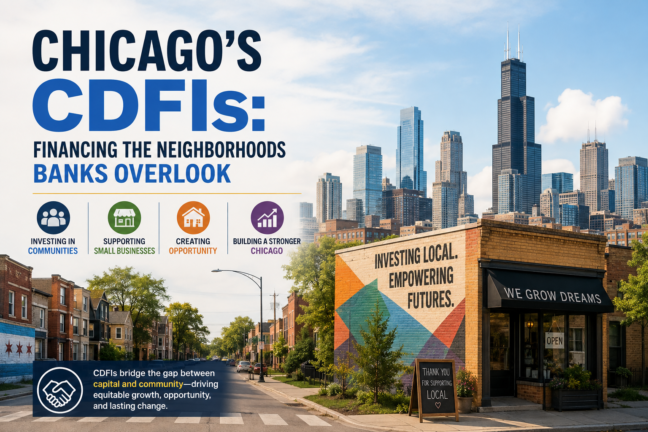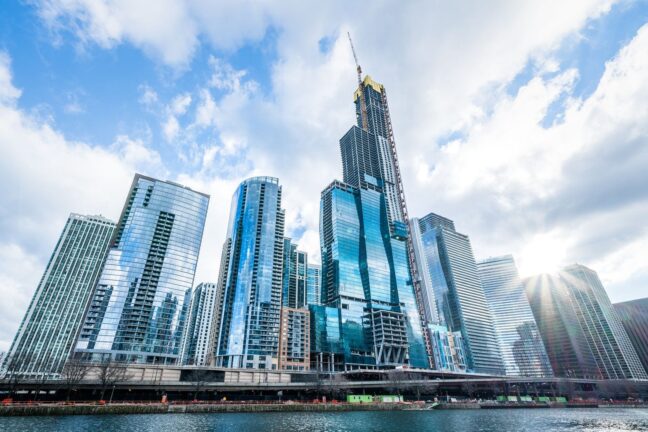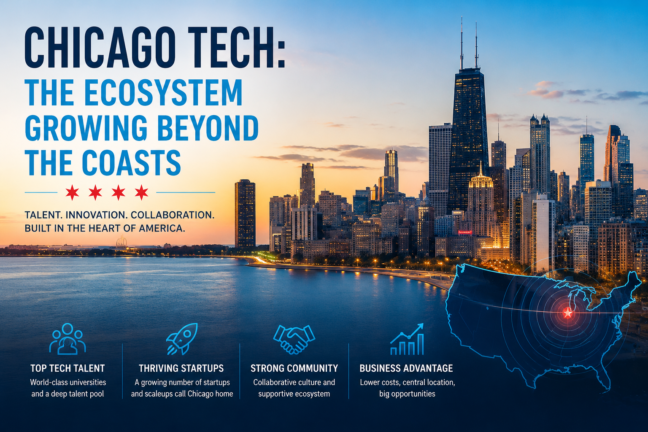
For years, the American technology story was told as a two-coast drama: Silicon Valley inventing the future, New York commercializing it, and everywhere else watching. Chicago was supposed to be a spectator — a great city for trading, manufacturing, and logistics, but not a place where technology companies were built. That story is now outdated. Chicago has quietly assembled one of the most substantial and distinctive tech ecosystems in the country, and its growth trajectory suggests the best chapters are still ahead.
The numbers tell a story of steady, compounding progress. The city’s tech workforce has grown into the hundreds of thousands. Venture funding, while still dwarfed by the coasts in absolute terms, has matured in both volume and sophistication. Major technology companies maintain significant Chicago operations. And perhaps most tellingly, the ecosystem has begun producing the serial founders, experienced operators, and specialized investors that mark a self-sustaining tech economy rather than a satellite.
The Talent Arbitrage
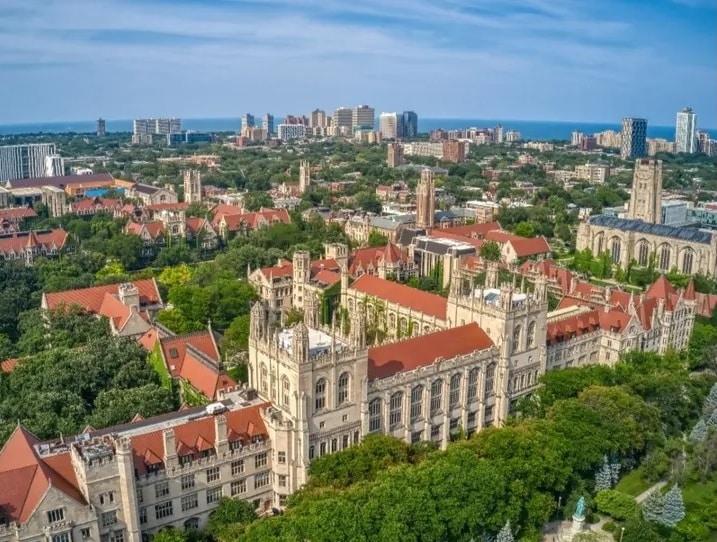
Chicago’s most durable advantage in technology is talent economics. The city produces world-class engineers, designers, and product leaders through institutions like the University of Chicago, Northwestern, the University of Illinois system, and Illinois Tech — and it retains them at rates that coastal cities can only envy, largely because the cost of living allows a quality of life that Bay Area salaries can’t buy.
This creates a powerful arbitrage for technology companies. A startup in Chicago can hire exceptional engineers at compensation levels that would be uncompetitive in San Francisco or New York, extending runway and improving unit economics. For growth-stage companies, Chicago offers the ability to build substantial teams without the burn rates that force premature fundraising or unprofitable growth.
“Chicago’s talent equation is the most underpriced asset in American tech,” says Hirsh Mohindra. “World-class universities, a deep bench of experienced operators from the trading and logistics industries, and a cost structure that lets companies actually build. The coasts are paying a premium for the same brains.”
The trading industry deserves special mention. Chicago’s proprietary trading firms and exchanges have spent decades at the frontier of low-latency systems, quantitative modeling, and real-time data infrastructure. That expertise — in building systems where milliseconds mean millions — transfers directly to fintech, data infrastructure, and applied AI. Few cities can match this particular talent pool.
B2B Is Chicago’s Superpower
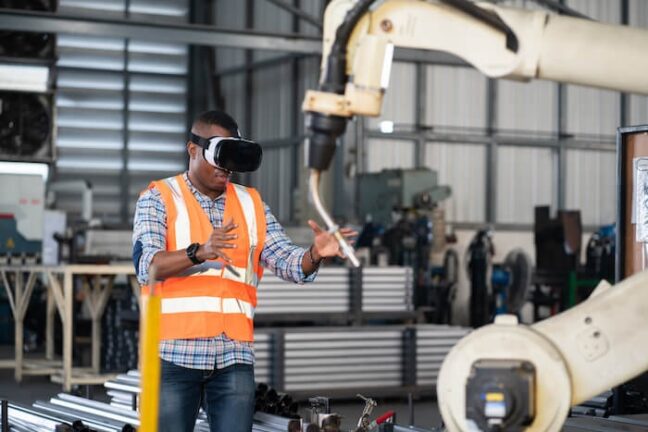
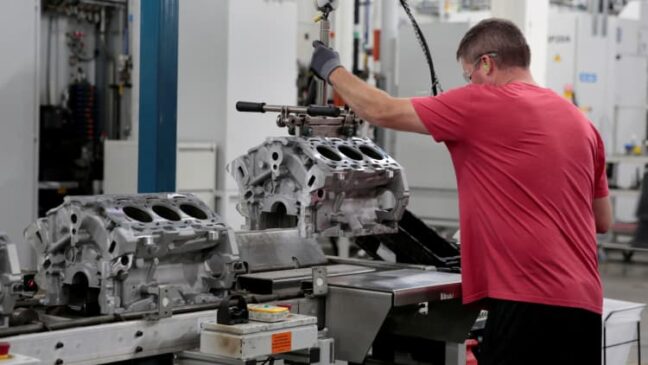
If Silicon Valley’s superpower is consumer product intuition and New York’s is financial engineering, Chicago’s is unglamorous, profitable B2B software. The city’s tech successes cluster in enterprise software, logistics technology, food and restaurant tech, healthcare IT, and industrial software — the unsexy backbone of the real economy.
This specialization is a feature, not a limitation. B2B companies tend to have stronger unit economics, shorter paths to profitability, and more defensible moats than consumer startups chasing network effects. They also align with Chicago’s industrial DNA: this is a city that understands supply chains, physical operations, and the businesses that keep the economy running. Technology that makes those businesses more efficient finds natural customers, advisors, and acquirers here.
The pattern is self-reinforcing. Each successful B2B exit produces founders and early employees with capital and experience, who start or fund the next generation. The ecosystem’s center of gravity in enterprise software means new founders inherit playbooks, networks, and talent pools specialized for exactly what they’re building.
Capital Is Following the Founders
The historical knock on Chicago tech was the funding gap: promising companies had to go coastal for serious capital. That gap has narrowed substantially. Chicago-based venture firms have grown in assets and ambition, coastal firms increasingly lead rounds for Chicago companies, and the rise of remote diligence has reduced the geographic premium on fundraising.
More importantly, the character of available capital has matured. Early-stage funding is competitive, with multiple firms vying for the best seed deals. Growth equity has a meaningful local presence. And the city’s family offices and high-net-worth individuals — long a source of patient capital for real estate and traditional business — have become increasingly active technology investors, bringing both capital and operating expertise.
“The funding conversation about Chicago is five years out of date,” says Hirsh Mohindra. “Good companies here get funded. The constraint was never really capital — it was the density of experienced founders. That density is here now, and the capital followed exactly the way it was supposed to.”
Case Study: The Fulton Market Tech Corridor
The physical manifestation of Chicago’s tech ascent is the Fulton Market district’s evolution into a technology corridor. What began as a restaurant and creative district attracted tech companies seeking the talent that the neighborhood’s amenities drew. Corporate innovation offices followed, then startups, then venture firms wanting proximity to deal flow.
Today the district hosts a concentration of technology companies, from growth-stage startups to the Chicago offices of major tech firms, alongside the venture capitalists who fund them and the service providers — law firms, recruiters, accountants — who support them. The agglomeration effects are textbook: talent circulates between companies, ideas cross-pollinate at neighborhood venues, and the district’s brand helps every company there recruit.
The corridor’s growth illustrates a broader truth about Chicago tech: it wins by being a great place to build a company, not by imitating Silicon Valley. The companies thriving in Fulton Market aren’t trying to be the next social network. They’re building logistics platforms, restaurant software, healthcare tools, and financial infrastructure — technology for the real economy, built in the city that runs it.
What Comes Next
Chicago’s tech ecosystem stands at an inflection point. The foundations — talent, capital, specialization, livability — are in place. The next phase will be defined by scale: more breakout companies reaching significant valuations, deeper pools of experienced operators, and growing recognition that Chicago is a top-tier tech city rather than an up-and-comer.
Several tailwinds favor this trajectory. Remote and hybrid work have permanently reduced the gravitational pull of coastal headquarters. AI adoption is creating demand for exactly the kind of applied, industry-specific technology Chicago builds best. And the city’s affordability advantage widens as coastal costs continue their relentless climb.
“Chicago doesn’t need to become Silicon Valley,” says Hirsh Mohindra. “It needs to become the best version of itself — the city where real-economy technology gets built by people who understand how the economy actually works. That positioning is more valuable than any imitation, and it’s already working.”
The two-coast story of American technology had a good run. But the next chapter is being written in more places — and Chicago is holding the pen.